





Dental Health Blog | Caledon Dental Centre
Can a Chipped Tooth Be Repaired? Options for Caledon Patients
June 18, 2026 / Dentistry
How Do Dentists Repair a Chipped Tooth?
A chipped tooth can be alarming, whether it happens while eating, during sports, or after an accidental fall. The good news is that many chipped teeth can be assessed and repaired. The most appropriate treatment depends on several factors, including the size of the chip, where it is located, whether the inner part of the tooth has been affected, and the overall condition of the tooth. Because no two chips are exactly alike, the first step is always a professional dental assessment rather than trying to determine the best treatment yourself.
Some chips are purely cosmetic and may cause little more than a rough edge. Others can expose sensitive areas of the tooth, affect your bite, or increase the risk of additional damage if left untreated. Understanding what dentists look for during an examination can help you know what to expect if you experience a chipped tooth.
What Counts as a Chipped Tooth?
Not every chipped tooth looks dramatic. In fact, many people don't realize they've chipped a tooth until they notice a rough spot with their tongue or their dentist points it out during a routine examination.
A chipped tooth refers to a portion of the tooth breaking away. The size of the chip can vary significantly. Some involve only a tiny piece of enamel near the edge of a front tooth, while others affect a larger portion of the chewing surface or even extend deeper into the tooth.
Chips may occur for a variety of reasons, including:
- Biting unexpectedly on something hard.
- Sports injuries or accidental falls.
- Trauma to the face or mouth.
- Teeth grinding or clenching over time.
- Existing decay or older restorations that weaken the tooth.
The appearance of a chip doesn't always reflect how serious it is. A small chip may feel perfectly fine, while another that appears similar could involve deeper layers of the tooth. That's why it's generally recommended to have any chipped tooth assessed, even if discomfort is minimal.
Why a Dental Assessment Matters
Although it may be tempting to judge the severity of a chipped tooth by looking in the mirror, appearance alone rarely tells the full story. During an examination, your dentist evaluates much more than the visible chip.
One important consideration is how much healthy tooth structure remains. A small chip affecting only the enamel may be managed differently than one extending into the dentin or involving the inner pulp of the tooth. Your dentist will also check whether the tooth has become loose, whether nearby teeth were affected during the injury, and whether the chip has altered your bite.
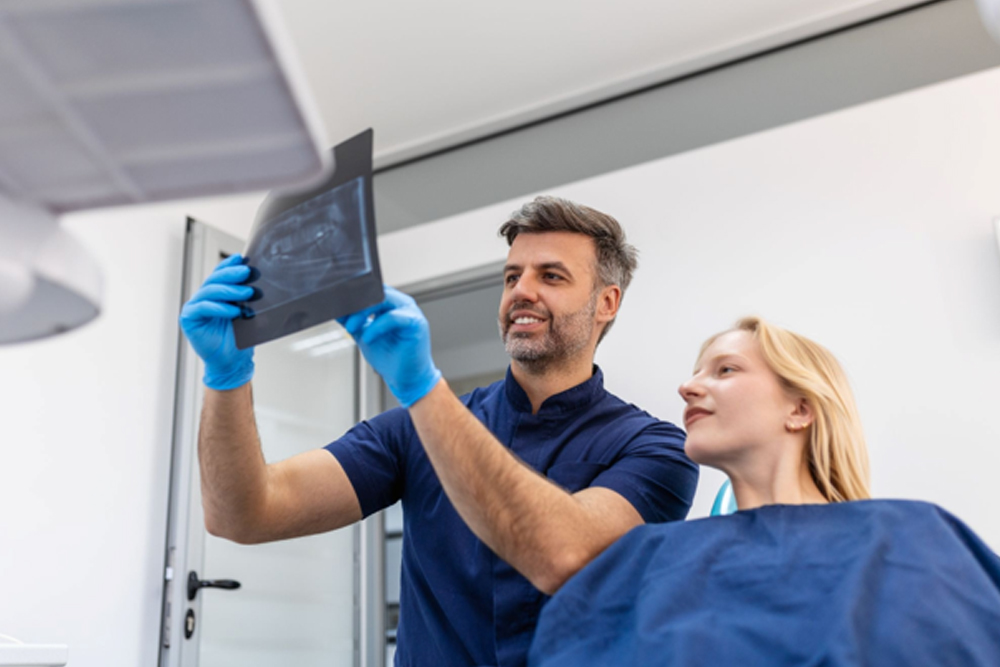
Diagnostic X-rays may also be recommended when appropriate to determine whether damage extends below the surface or involves the tooth's root or surrounding bone.
Because treatment depends on these findings, several repair approaches may be discussed rather than one universal solution. Learning more about cosmetic dentistry in Caledon can also help explain some of the techniques that may be considered when restoring the appearance and function of a chipped tooth after an assessment.
In many situations, seeking advice sooner rather than later helps prevent a small problem from becoming more complicated. Even if the tooth isn't painful, a sharp edge, an unnoticed crack, or additional weakening may increase the likelihood of further damage over time.
Common Ways Dentists May Repair a Chipped Tooth
The treatment recommended for a chipped tooth depends on the results of your examination rather than the chip alone. Your dentist considers the location of the tooth, the amount of remaining healthy structure, your symptoms, and whether the tooth continues to function normally.
For smaller chips, smoothing or polishing the edge may sometimes be appropriate if only a minimal amount of enamel has been affected. In other cases, tooth-coloured bonding material may be used to restore the missing portion while blending naturally with the surrounding tooth.
Larger chips may require a different approach. If more of the tooth has been lost, a dental crown may be discussed to help restore both appearance and function. When a chip extends into the inner pulp of the tooth, additional treatment may be necessary before the tooth can be restored.
The goal isn't simply to improve the appearance of the tooth. Your dentist also wants to restore normal function, protect the remaining tooth structure, and reduce the chance of further damage whenever possible.
Because every chipped tooth presents differently, treatment recommendations are based on individual clinical findings rather than assuming one repair option is suitable for everyone.
When a Chipped Tooth Needs Prompt Attention
Not every chipped tooth requires urgent treatment, but some situations should be assessed as soon as reasonably possible. While a small chip that causes no discomfort may not require immediate attention, larger injuries can expose sensitive areas of the tooth or affect its ability to function normally.
You should arrange a dental assessment promptly if you notice:
- Significant pain or sensitivity that doesn't improve.
- Bleeding from the tooth or surrounding gums after an injury.
- Swelling around the affected tooth.
- A large portion of the tooth has broken away.
- The tooth feels loose or has shifted position.
- A sharp edge is cutting your tongue or cheek.
If the chipped tooth results from significant trauma, causes persistent bleeding, or is accompanied by considerable pain, learning more about emergency dental care can help you understand when a prompt dental evaluation is appropriate. The exact timing of treatment depends on the nature of the injury and the findings of your examination.
Even when a chipped tooth doesn't seem serious, it's generally a good idea to have it evaluated. Minor chips can sometimes become larger over time if the weakened tooth continues to experience normal chewing forces.
How to Protect a Chipped Tooth Until You Can Be Seen
If you chip a tooth, there are a few simple steps that may help protect it before your appointment.
Rinse your mouth gently with warm water to remove any debris, especially if the injury happened while eating or after a fall. If there's minor swelling, applying a cold compress to the outside of your face may help reduce discomfort.
Try to avoid chewing on the affected side until the tooth has been examined. Hard foods such as ice, popcorn kernels, nuts, and hard candies may increase the risk of additional damage if the tooth has been weakened.
If the broken edge feels sharp, be careful not to repeatedly rub it with your tongue, as this may irritate the surrounding soft tissues. Some people also find that avoiding very hot or very cold foods helps reduce temporary sensitivity until the tooth is assessed.
Although these steps may help protect the tooth temporarily, they are not a substitute for a professional examination. Only your dentist can determine whether the chip involves the enamel alone or extends into deeper structures that require treatment.
Chipped Tooth FAQs
Can a small chipped tooth be repaired?
Often, yes. Small chips affecting only the outer enamel may sometimes be repaired with conservative treatment, although the appropriate approach depends on the size, location, and condition of the tooth. Your dentist will recommend the option that best suits your situation after an examination.
Is a chipped tooth always a dental emergency?
No. Some chipped teeth are minor and cause little or no discomfort. However, larger fractures, significant pain, bleeding, swelling, or trauma affecting multiple teeth should be assessed promptly.
Can a chipped tooth get worse if I leave it alone?
It can. Even a small chip may create a weakened area that is more likely to fracture further during normal chewing. In some cases, bacteria may also gain access to deeper parts of the tooth if damage progresses.
How do dentists decide how to repair a chipped tooth?
Your dentist considers several factors, including the size of the chip, which part of the tooth has been affected, whether the tooth remains structurally sound, your symptoms, and diagnostic findings from the examination. The recommended treatment is based on the overall condition of the tooth rather than the appearance of the chip alone.
What should I do right after I chip a tooth?
Rinse your mouth with warm water, avoid chewing on the affected side, and contact your dentist to arrange an assessment. If the injury involves significant pain, swelling, bleeding, or facial trauma, you should seek prompt dental evaluation.
Talk to a Caledon Dental Centre Dentist About a Chipped Tooth
Whether your chipped tooth seems minor or more significant, arranging a professional assessment is the best way to understand your treatment options. A dentist can evaluate the extent of the damage, determine whether the tooth has been weakened beyond what is visible, and explain which repair approach may be appropriate for your individual situation.
If you have chipped a tooth and would like personalized recommendations, contact Caledon Dental Centre to schedule an assessment. The dental team can examine the affected tooth, answer your questions, and discuss the treatment options that best support your oral health without making assumptions before your examination.
-